Lot #59 - A Fine Empire Ormolu and Griotte Marble Mantel Clock, Signed Milan Jeune a' Paris
A Fine Empire Ormolu and Griotte Marble Mantel Clock, Signed Milan Jeune a' Paris
Estimate: 5 000 - 7 000 £
Auction ended
Lot Description
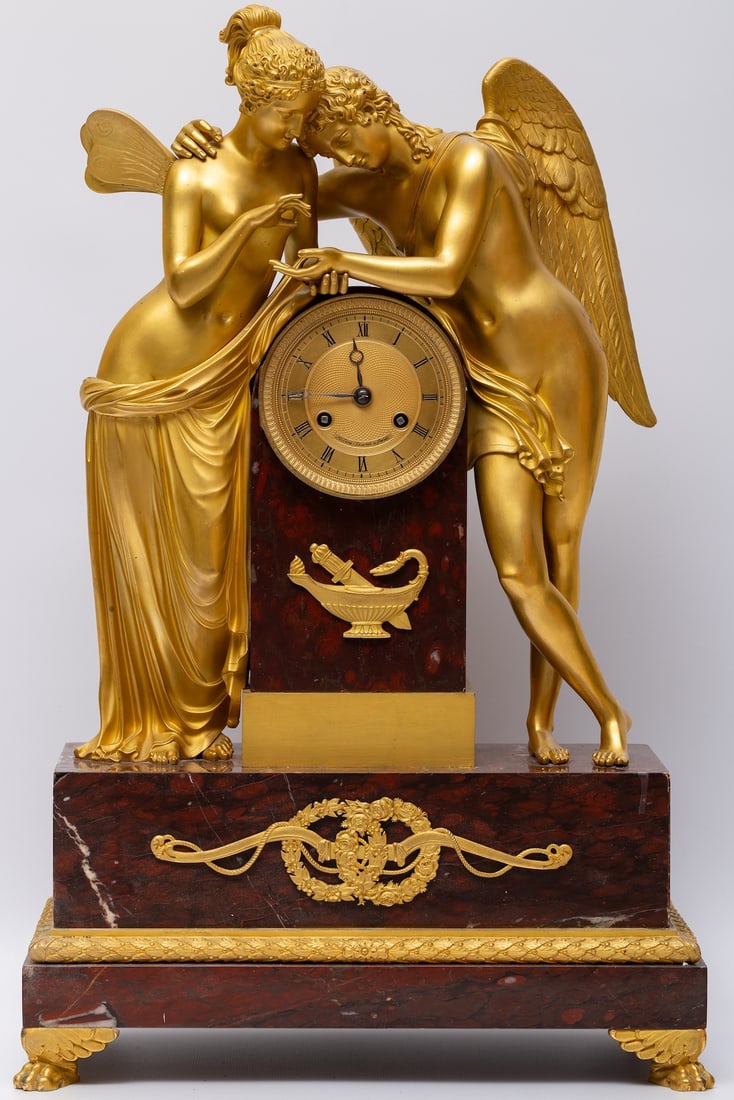
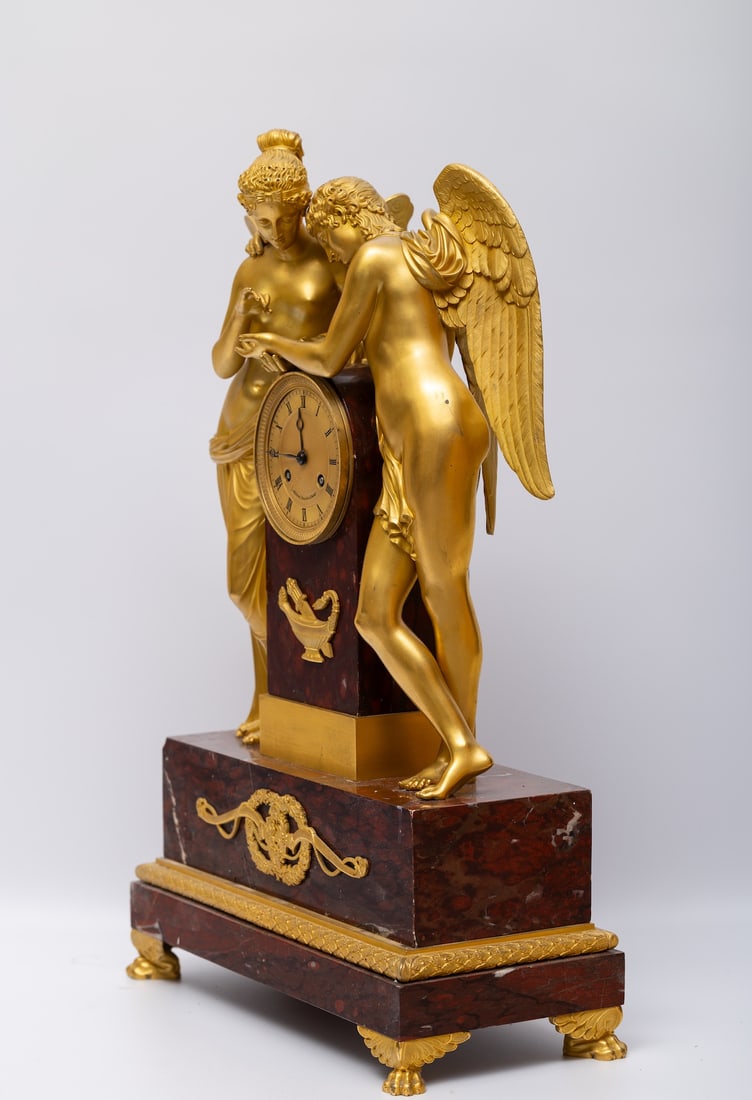
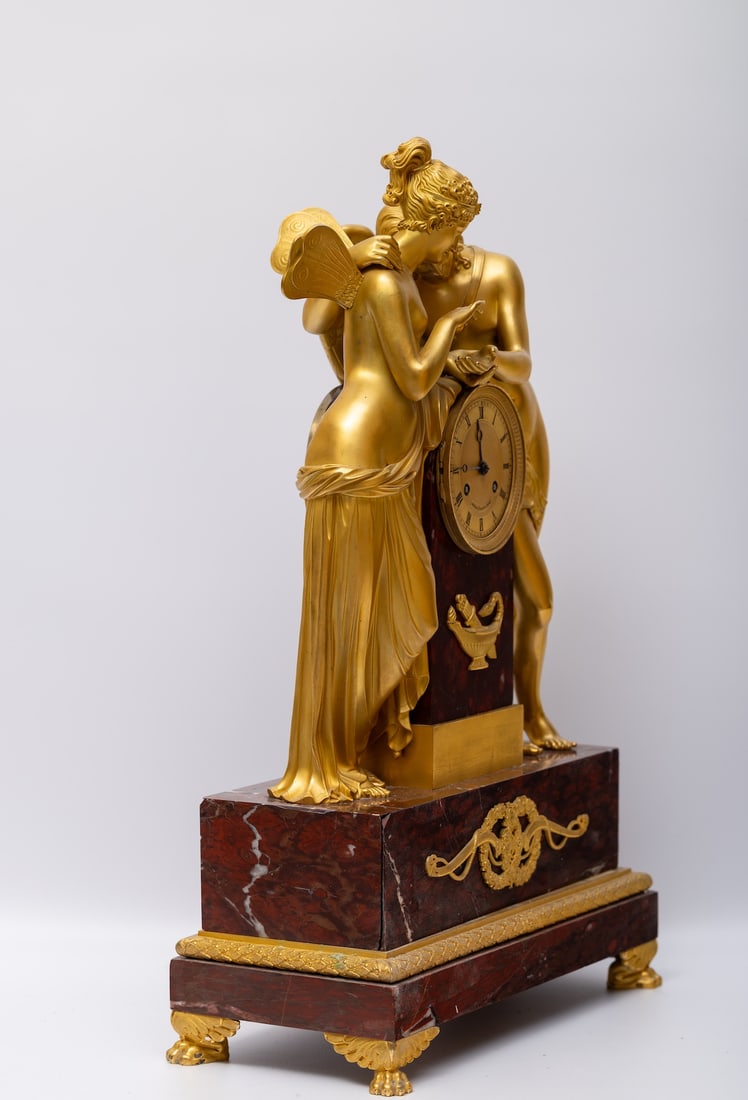
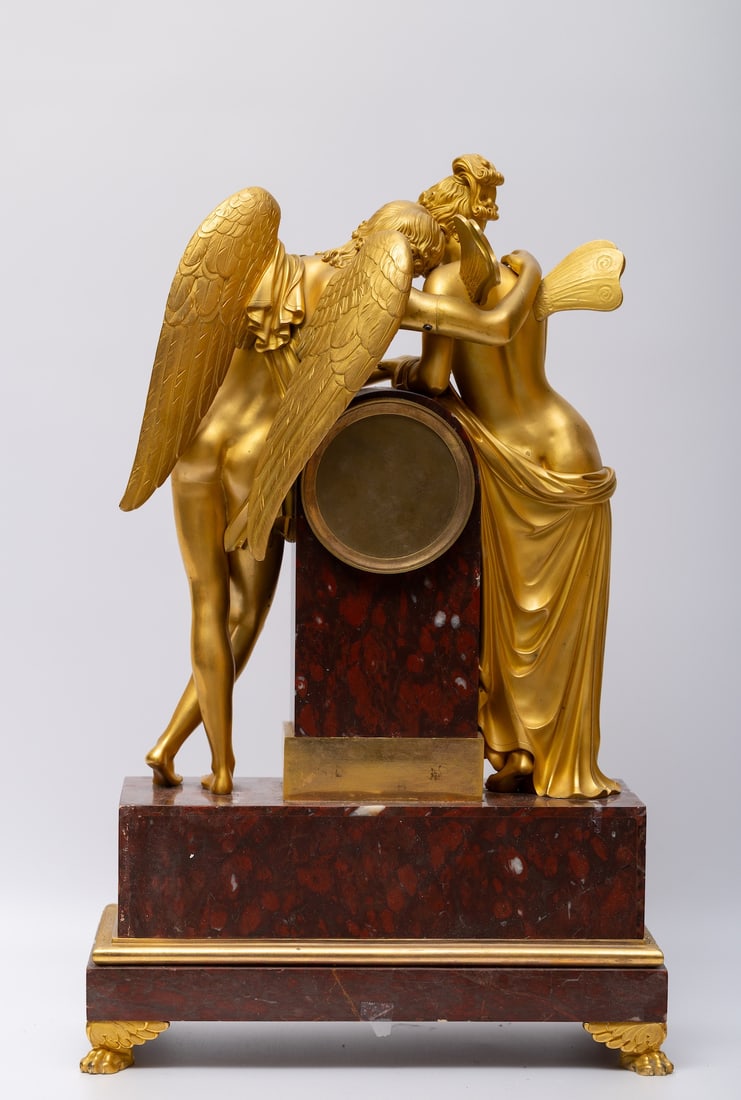
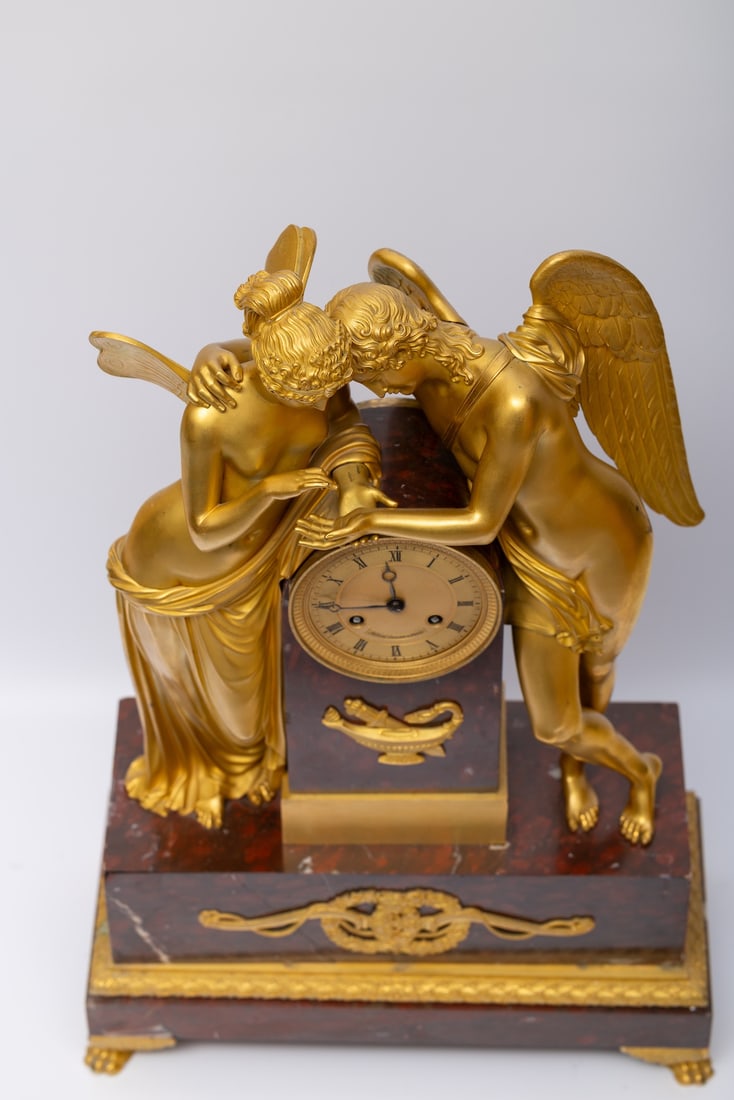
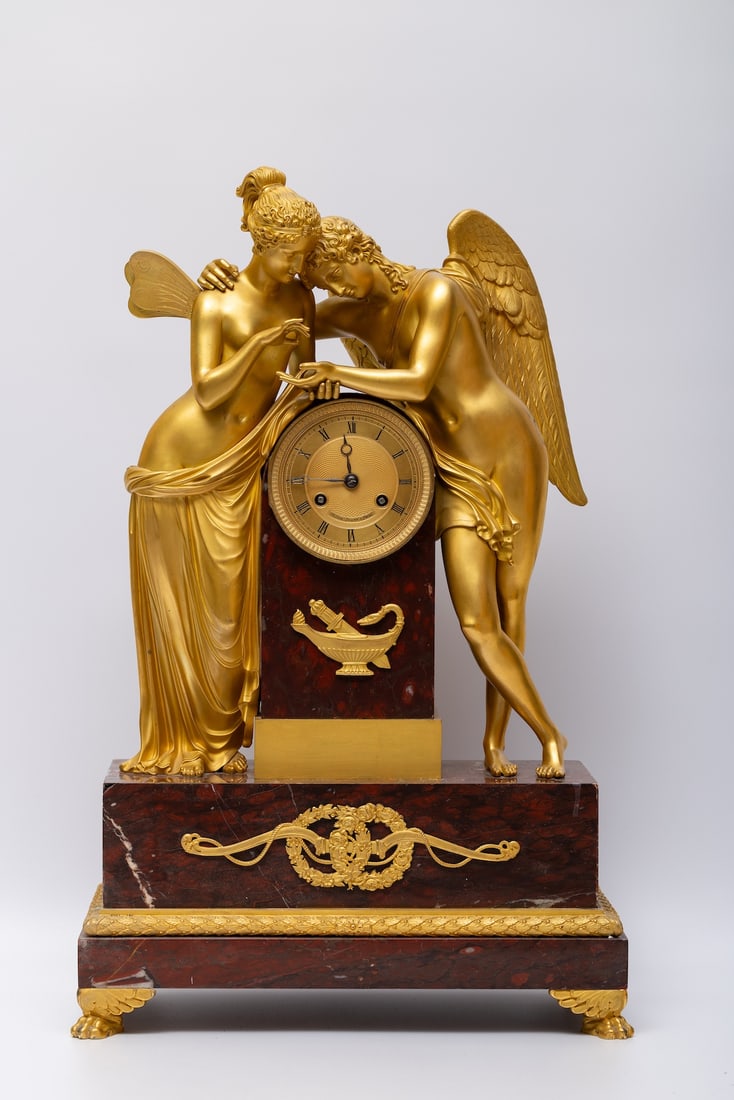
A RESTORATION PERIOD ORMOLU AND ROUGE GRIOTTE MARBLE CLOCK, DEPICTING PSYCHE AND CUPID
Attributed to Pierre-Philippe THOMIRE (1751–1843) for Thomire-Duterme & Cie, Provider to the Imperial Palaces.
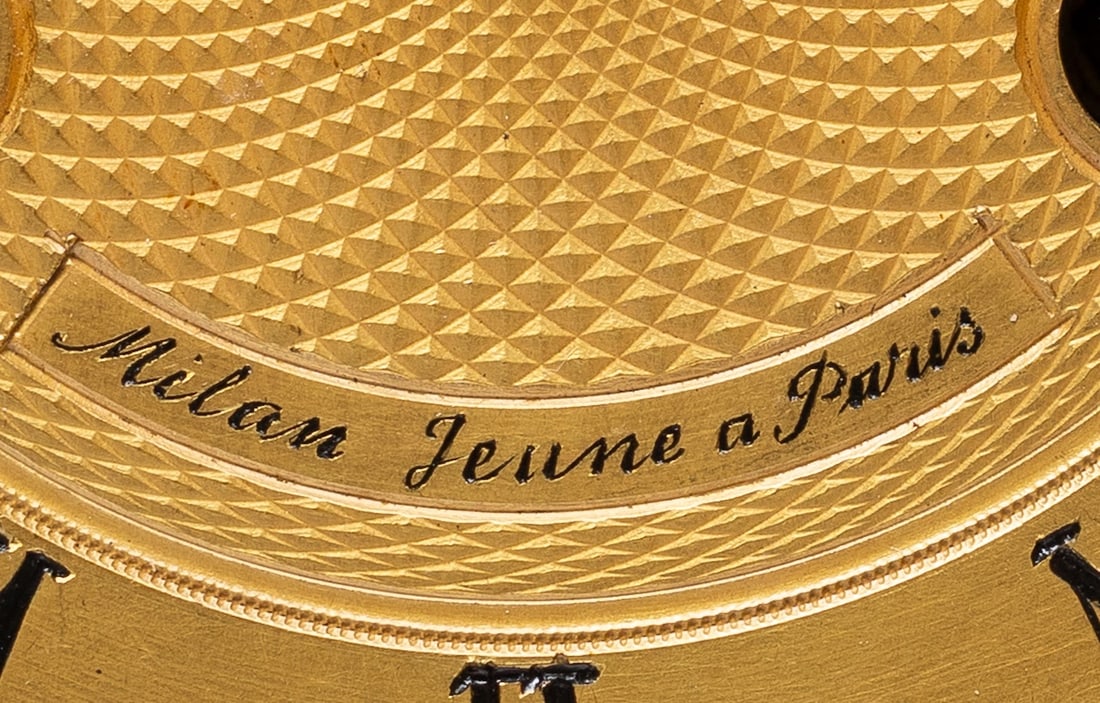
The movement and dial by "Milan Jeune à Paris»
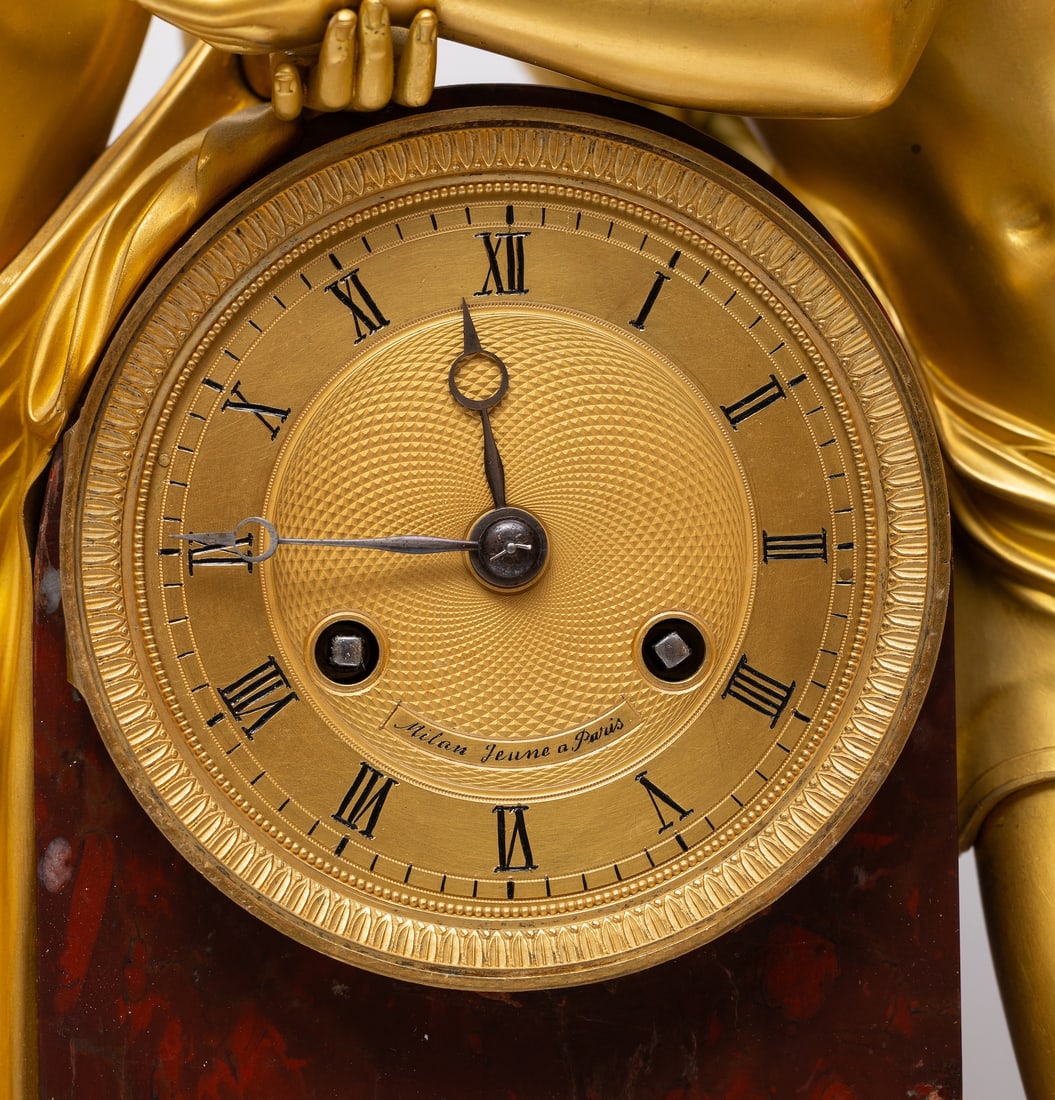
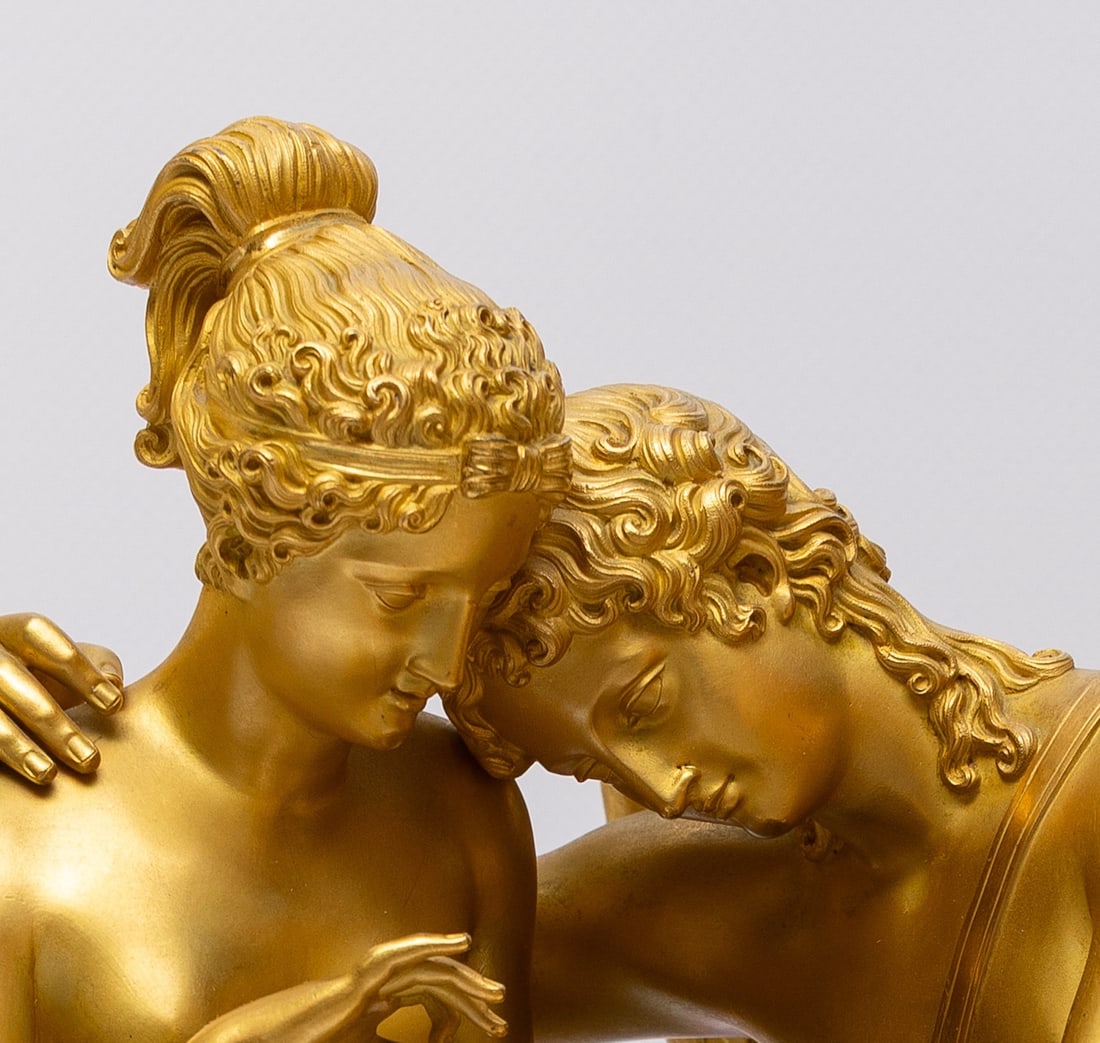
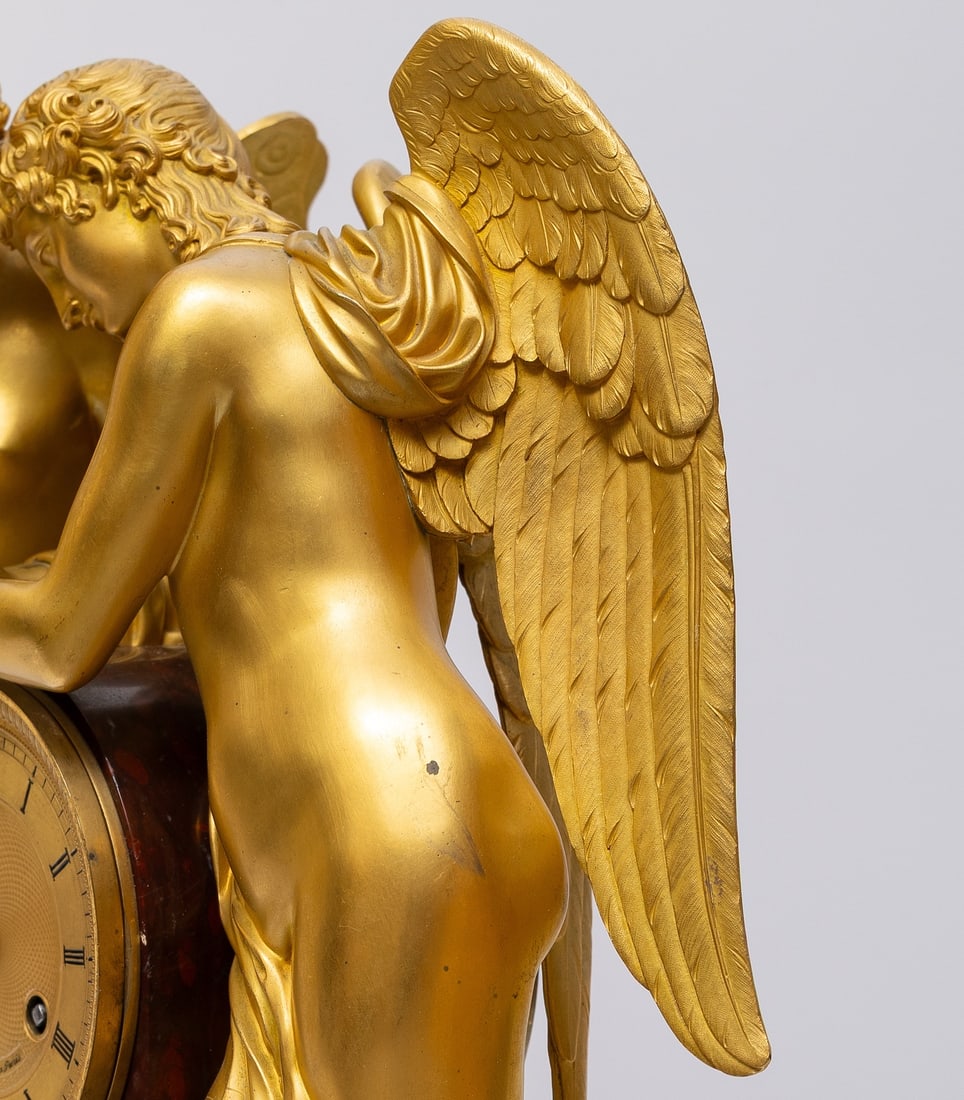
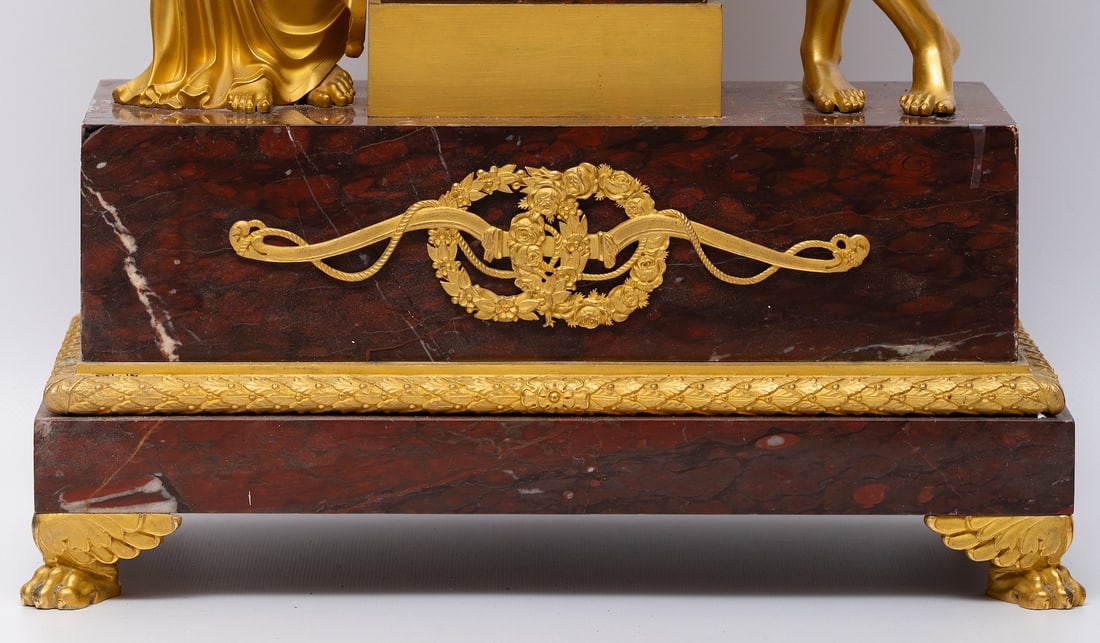
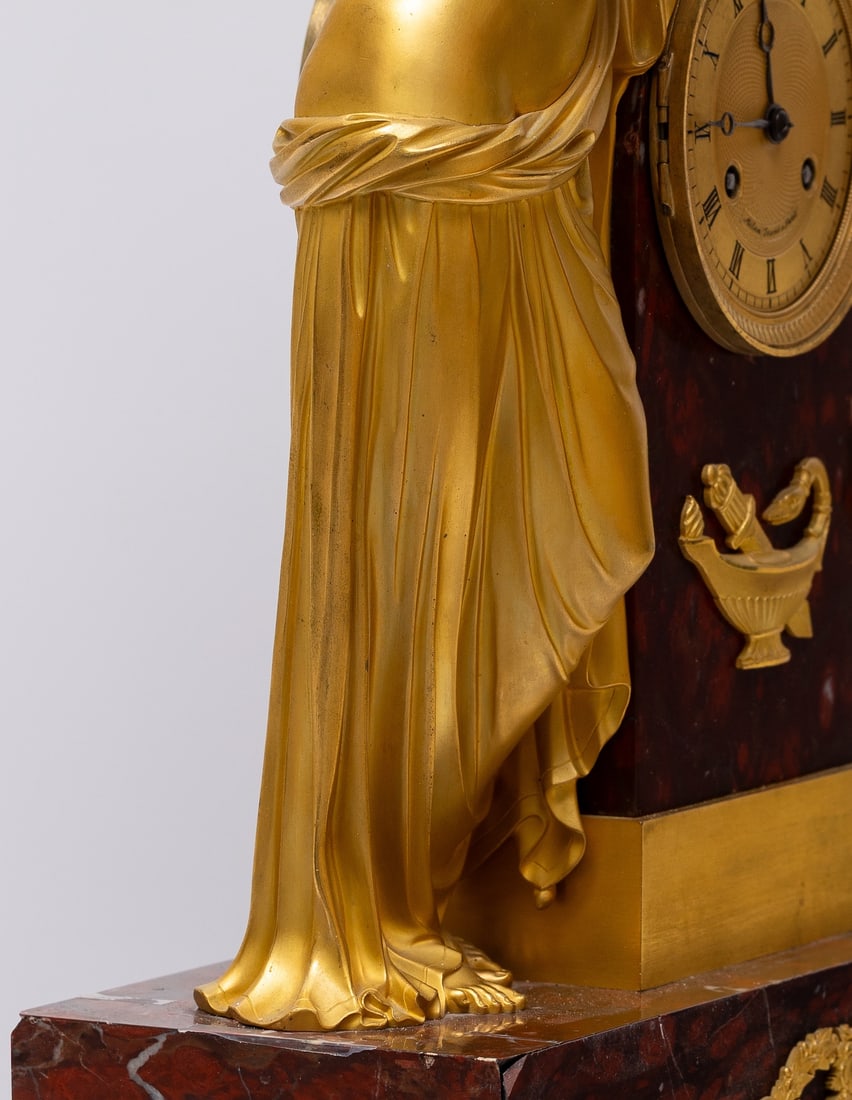
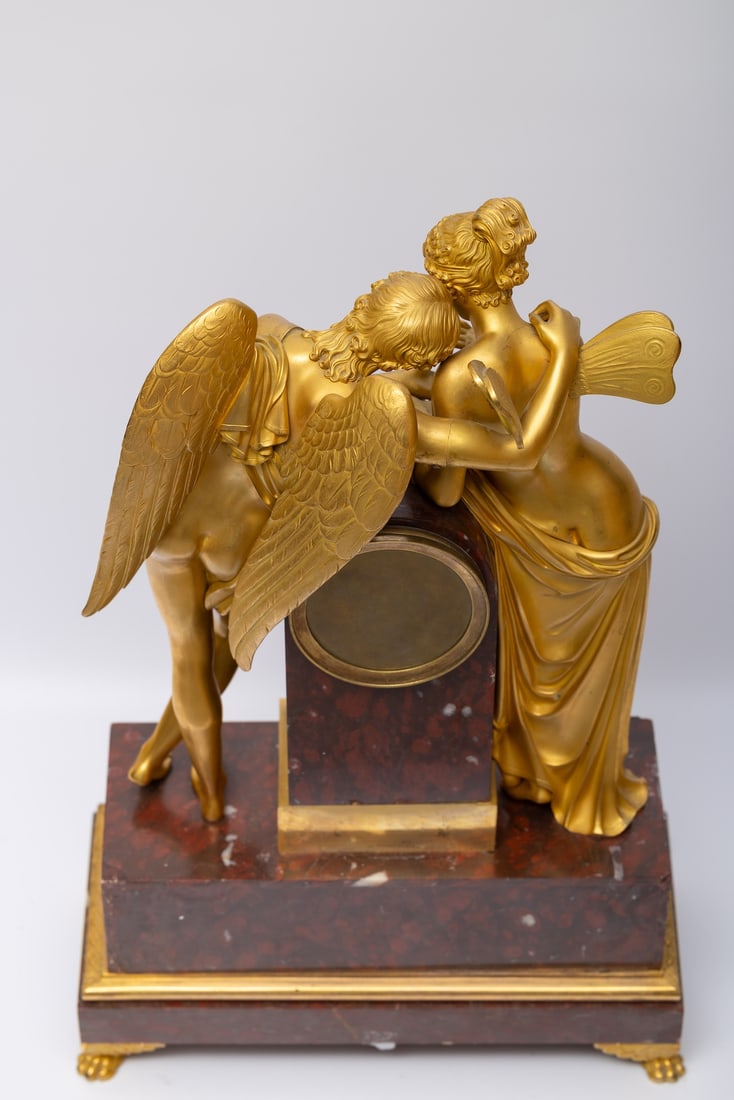
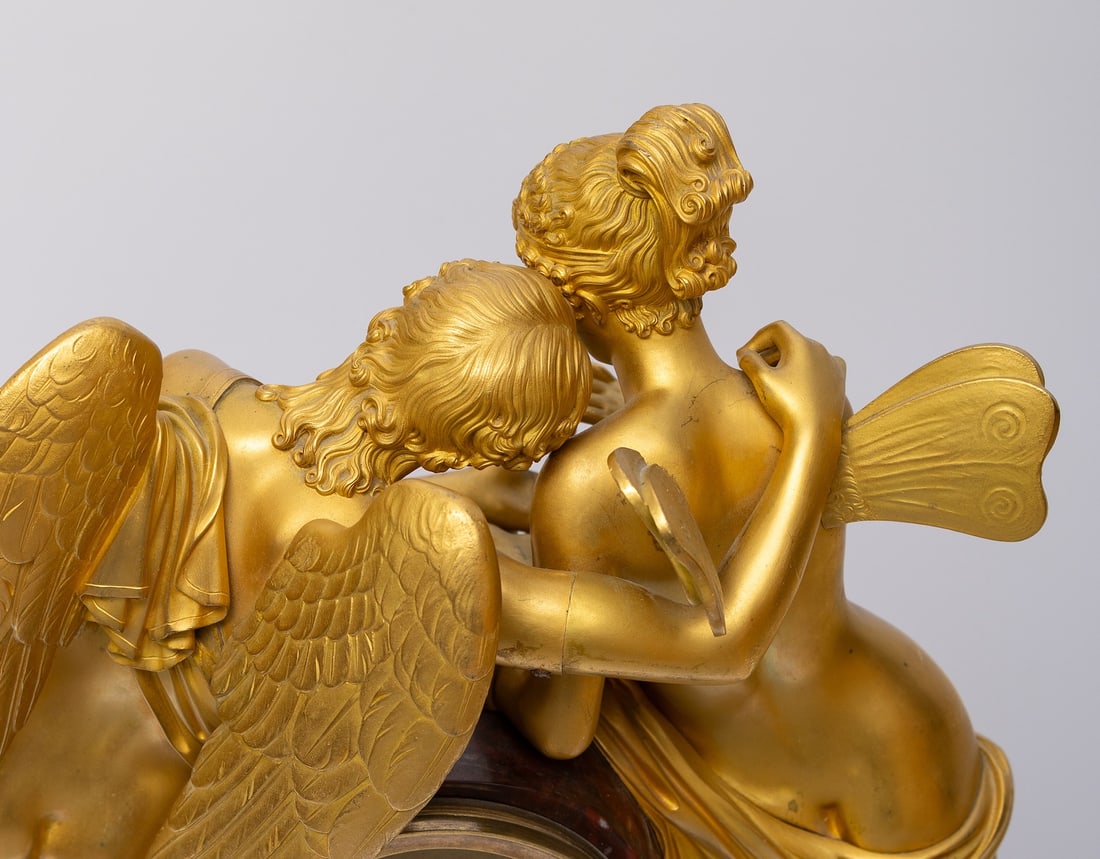
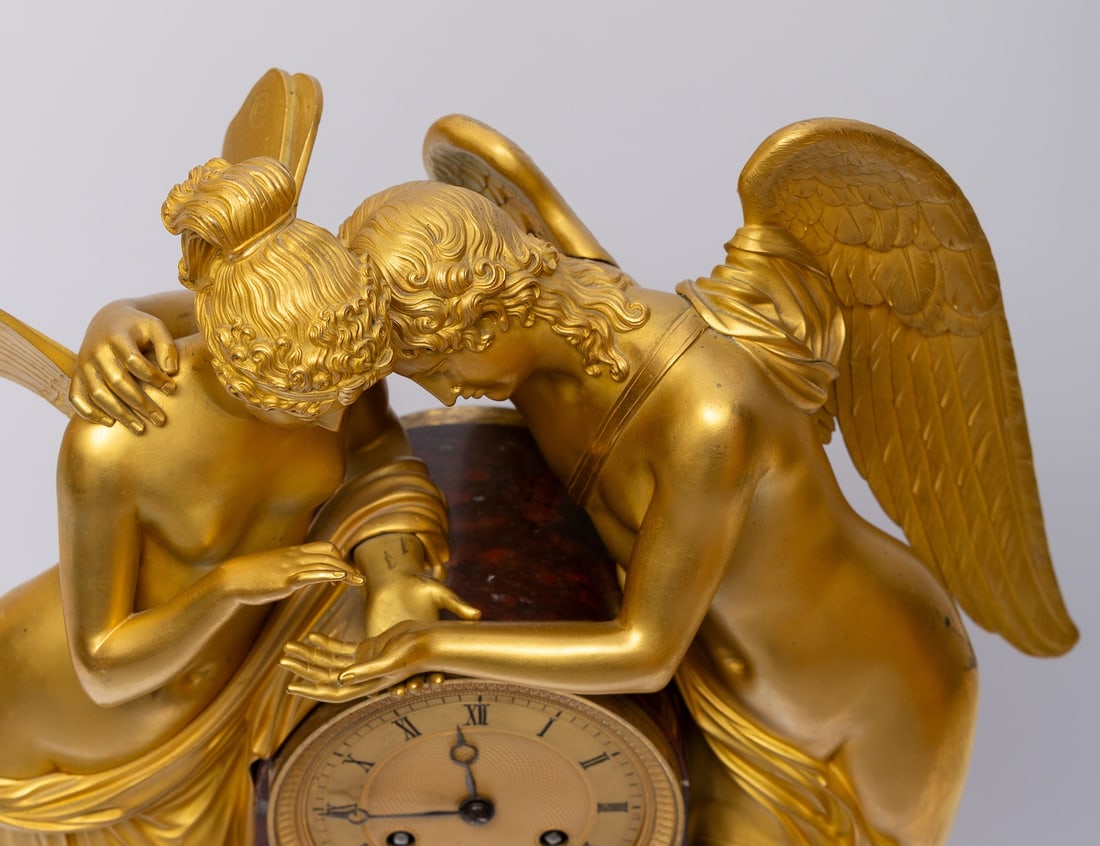
The circular dial, featuring a partially engine-turned (guilloché) ground framed by a floral frieze, with Roman numerals for the hours and baton markers for five-minute intervals, is set within an arched pedestal (borne). The pedestal is surmounted by the embracing figures of Psyche and Cupid. Psyche is depicted with butterfly wings, symbolizing the soul, united with her lover. The rectangular base is adorned with an applied mount of a stringed quiver crowned with flowers. The plinth features a laurel leaf frieze, supported by rectangular feet decorated with rosettes within recessed panels.
Dial are signed "Milan Jeune à Paris".
Dimensions 56.5 x 17 x 36 cm (22 1/2 x 14 x 6 1/2 inches)
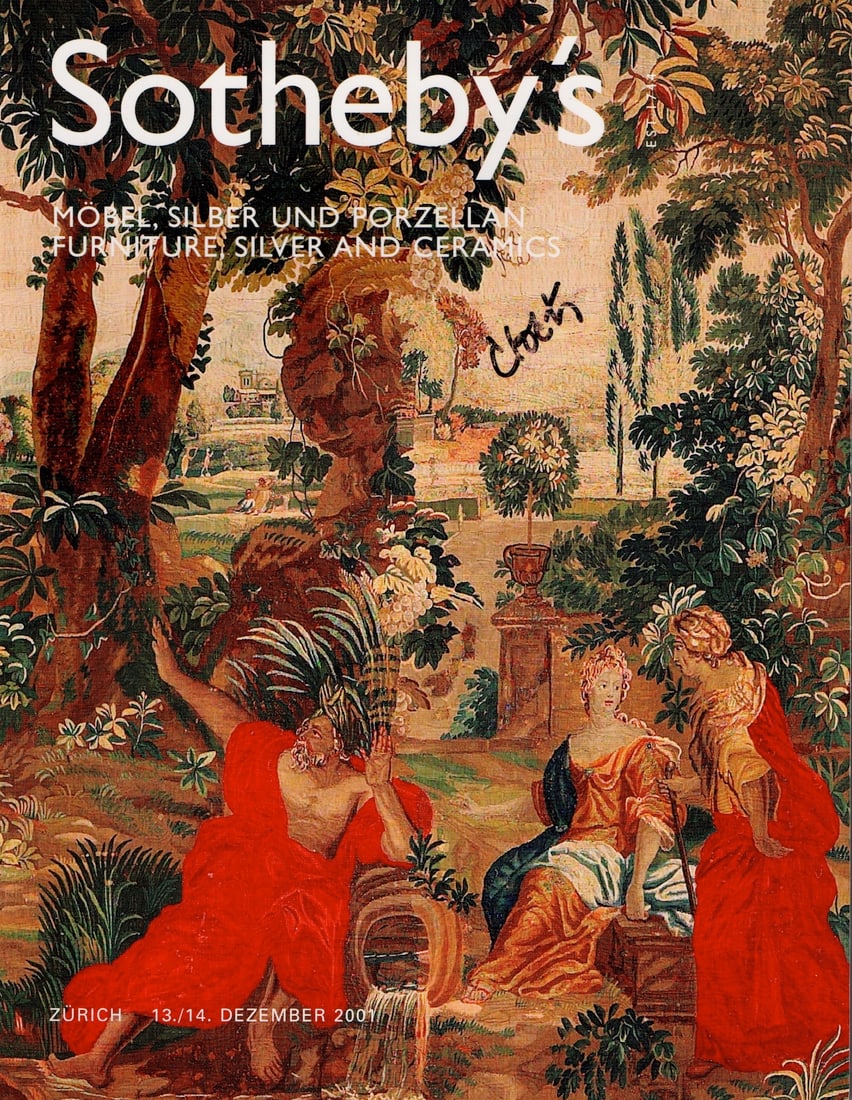
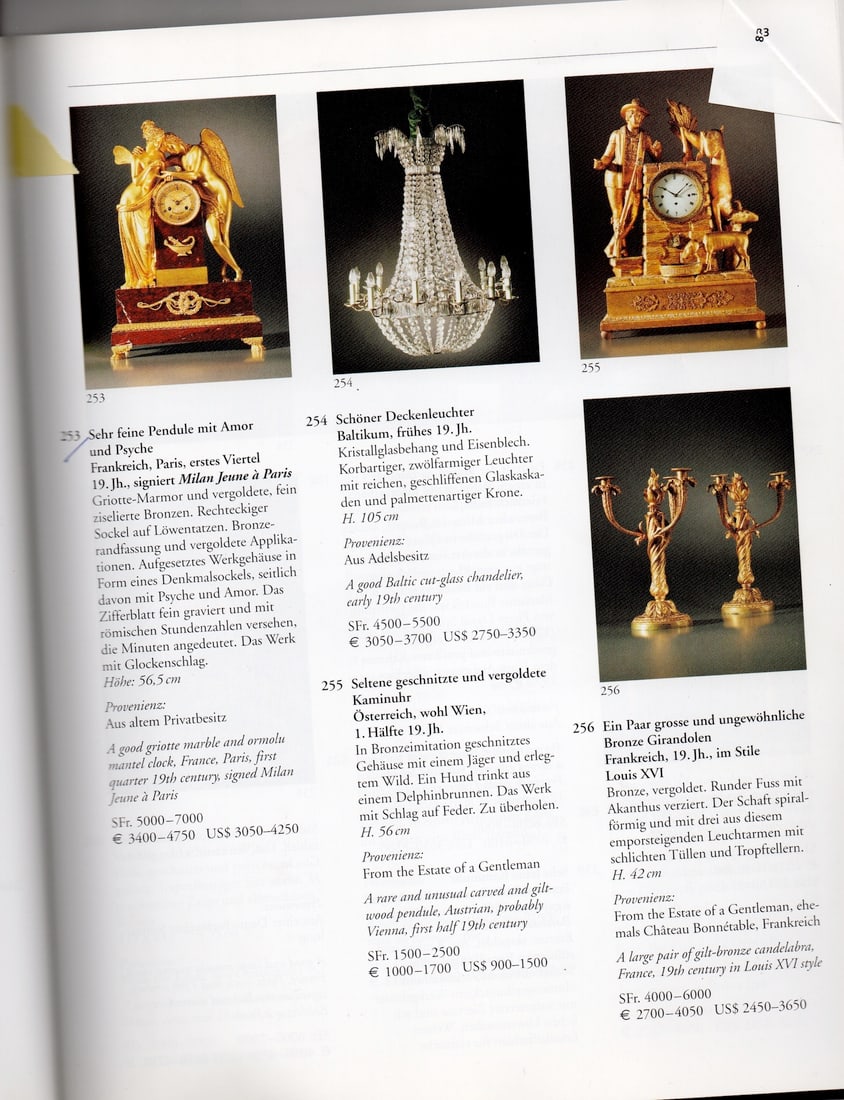
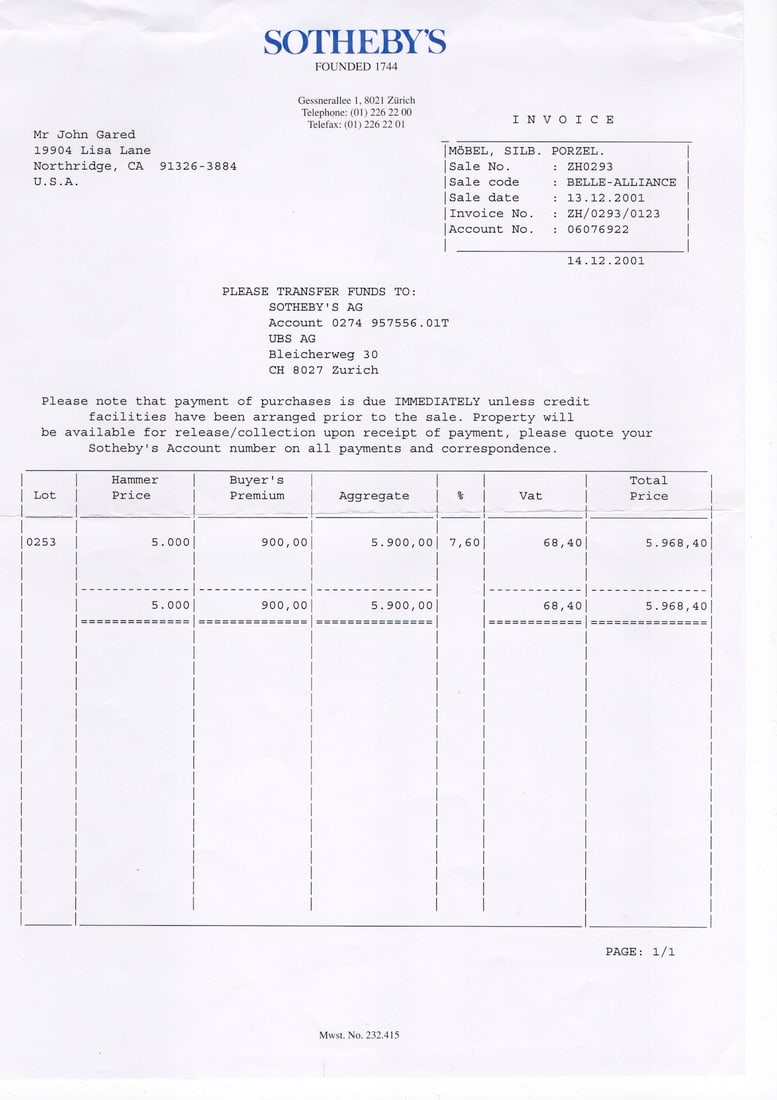
Sold at Sotheby's, Zurich, Mobel, Silber, und Porzellan, December 13-14, 2001, Lot 253. Included with the Lot is a catalog from the sale and receipt of purchase.
"Milan Jeune à Paris" was a French clockmaker active during the First Empire and the Bourbon Restoration periods (circa 1800–1830). His name is associated with high-quality mantel clocks characteristic of that era. His work is defined by the use of luxurious materials typical of the period, such as ormolu (gilt-bronze) and rare marbles, particularly "rouge griotte" (a cherry-red marble with deep veining). Clocks bearing his signature are considered exemplary specimens of French horology from this period, distinguished by their exquisite cast and chased gilt-bronze details.
Pierre-Philippe Thomire (1751–1843), the son of a Parisian chaser (ciseleur), studied sculpture at the Académie de Saint-Luc in Rome under the tutelage of Pajou and Houdon. He later joined the workshop of Gouthière. In 1776, he established his own business and, following the bankruptcy of his master, became the most renowned chaser and gilder of his time.
This clock is a free interpretation of Canova’s sculpture "Psyche Revived by Cupid's Kiss" (standing version), currently held at the Louvre Museum (Inv. No. MR 1776).
Attributed to Pierre-Philippe THOMIRE (1751–1843) for Thomire-Duterme & Cie, Provider to the Imperial Palaces.
The movement and dial by "Milan Jeune à Paris»
The circular dial, featuring a partially engine-turned (guilloché) ground framed by a floral frieze, with Roman numerals for the hours and baton markers for five-minute intervals, is set within an arched pedestal (borne). The pedestal is surmounted by the embracing figures of Psyche and Cupid. Psyche is depicted with butterfly wings, symbolizing the soul, united with her lover. The rectangular base is adorned with an applied mount of a stringed quiver crowned with flowers. The plinth features a laurel leaf frieze, supported by rectangular feet decorated with rosettes within recessed panels.
Dial are signed "Milan Jeune à Paris".
Dimensions 56.5 x 17 x 36 cm (22 1/2 x 14 x 6 1/2 inches)
Sold at Sotheby's, Zurich, Mobel, Silber, und Porzellan, December 13-14, 2001, Lot 253. Included with the Lot is a catalog from the sale and receipt of purchase.
"Milan Jeune à Paris" was a French clockmaker active during the First Empire and the Bourbon Restoration periods (circa 1800–1830). His name is associated with high-quality mantel clocks characteristic of that era. His work is defined by the use of luxurious materials typical of the period, such as ormolu (gilt-bronze) and rare marbles, particularly "rouge griotte" (a cherry-red marble with deep veining). Clocks bearing his signature are considered exemplary specimens of French horology from this period, distinguished by their exquisite cast and chased gilt-bronze details.
Pierre-Philippe Thomire (1751–1843), the son of a Parisian chaser (ciseleur), studied sculpture at the Académie de Saint-Luc in Rome under the tutelage of Pajou and Houdon. He later joined the workshop of Gouthière. In 1776, he established his own business and, following the bankruptcy of his master, became the most renowned chaser and gilder of his time.
This clock is a free interpretation of Canova’s sculpture "Psyche Revived by Cupid's Kiss" (standing version), currently held at the Louvre Museum (Inv. No. MR 1776).
Conditions
Auction Description
You can also be interested in:

CONTACT US
Should you need any further information, please do not hesitate to contact us.